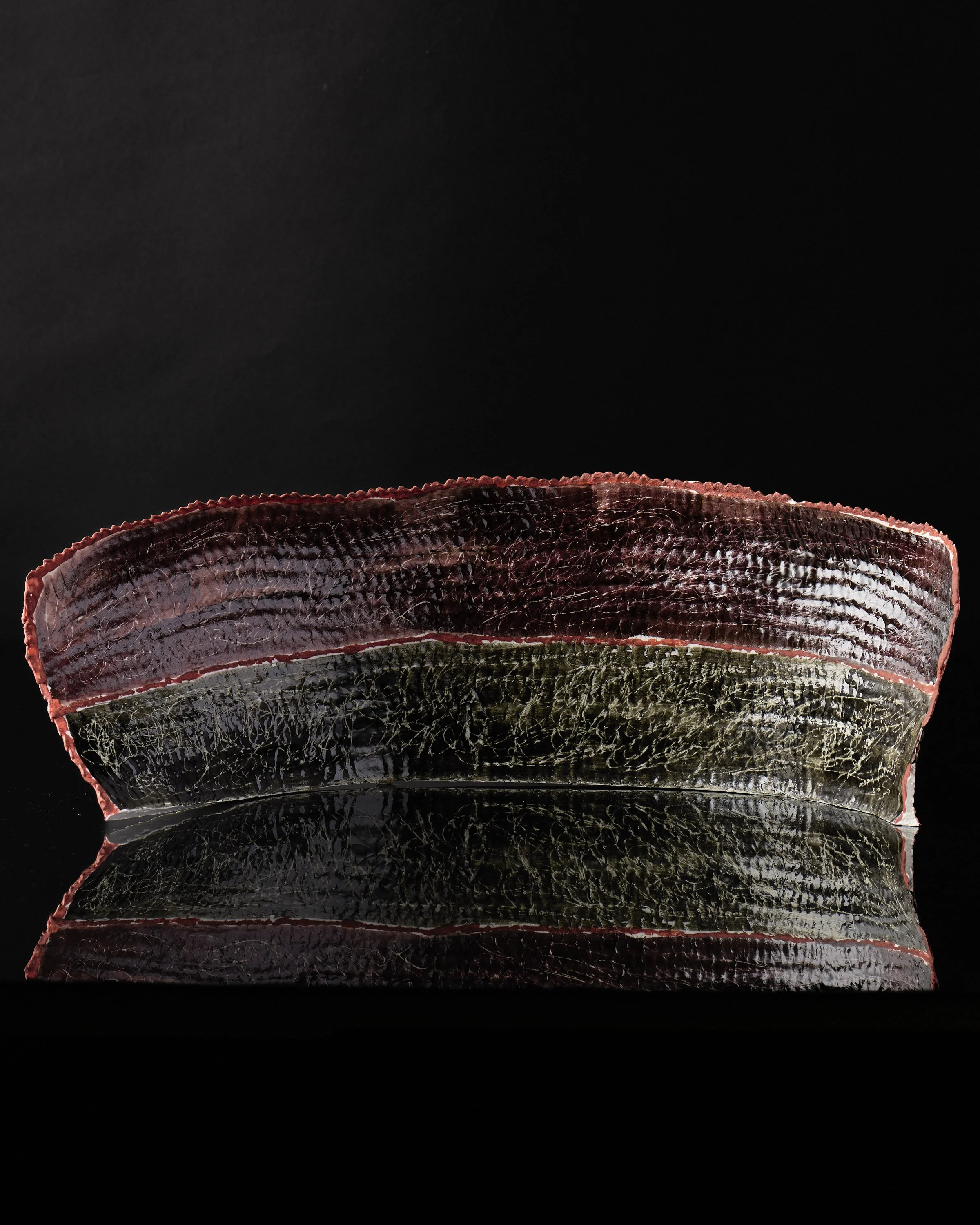
 Image 1 of 3
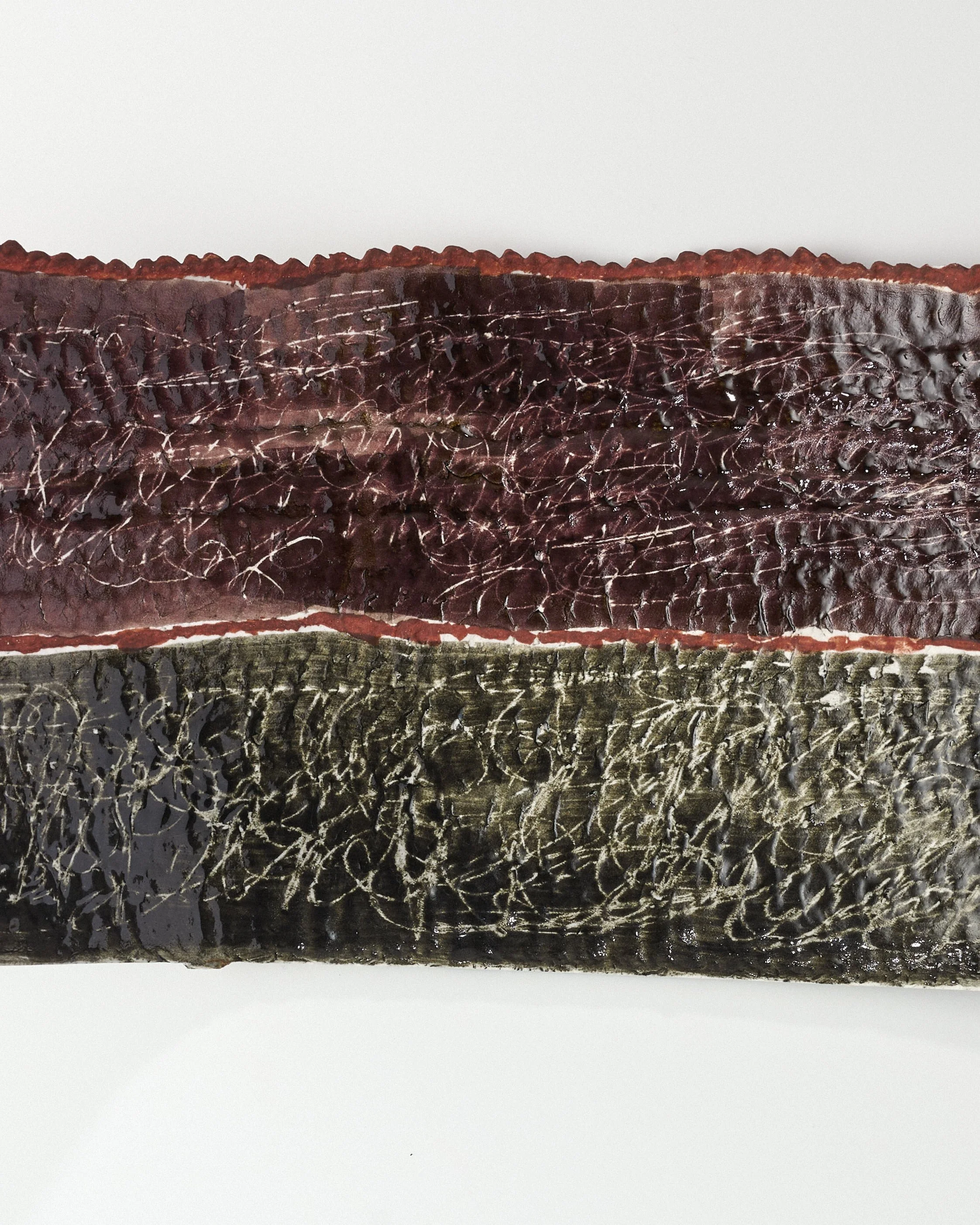 Image 2 of 3
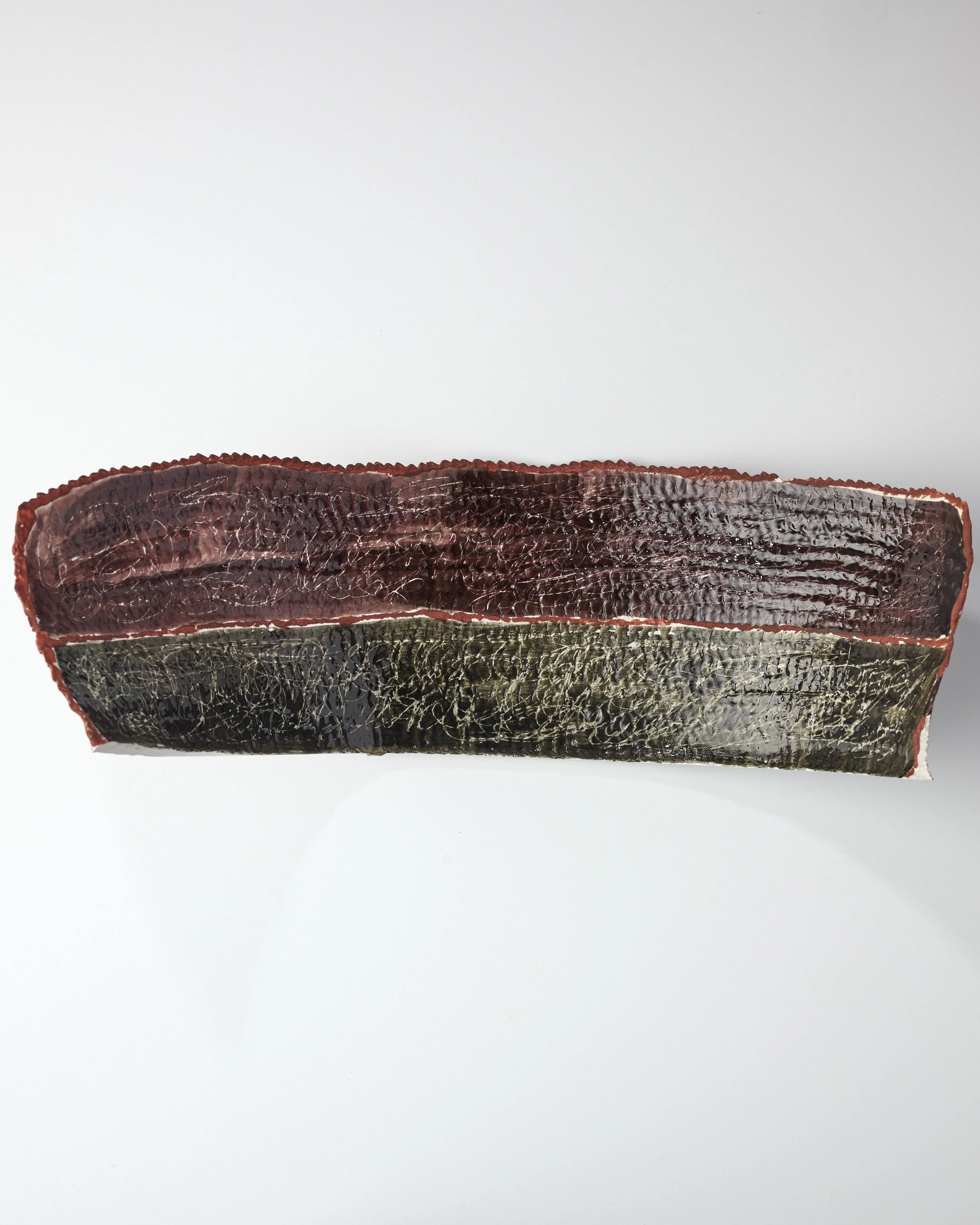 Image 3 of 3
MATERIAL INFORMATION
Hand-coiled from fine porcelain clay and finished with a custom-formulated glaze and slip. The piece is twice fired: first to 1000°C to remove all remaining water content and prepare the clay body for glaze application, then again at 1250°C to vitrify the porcelain and fuse the glaze to the surface.
-
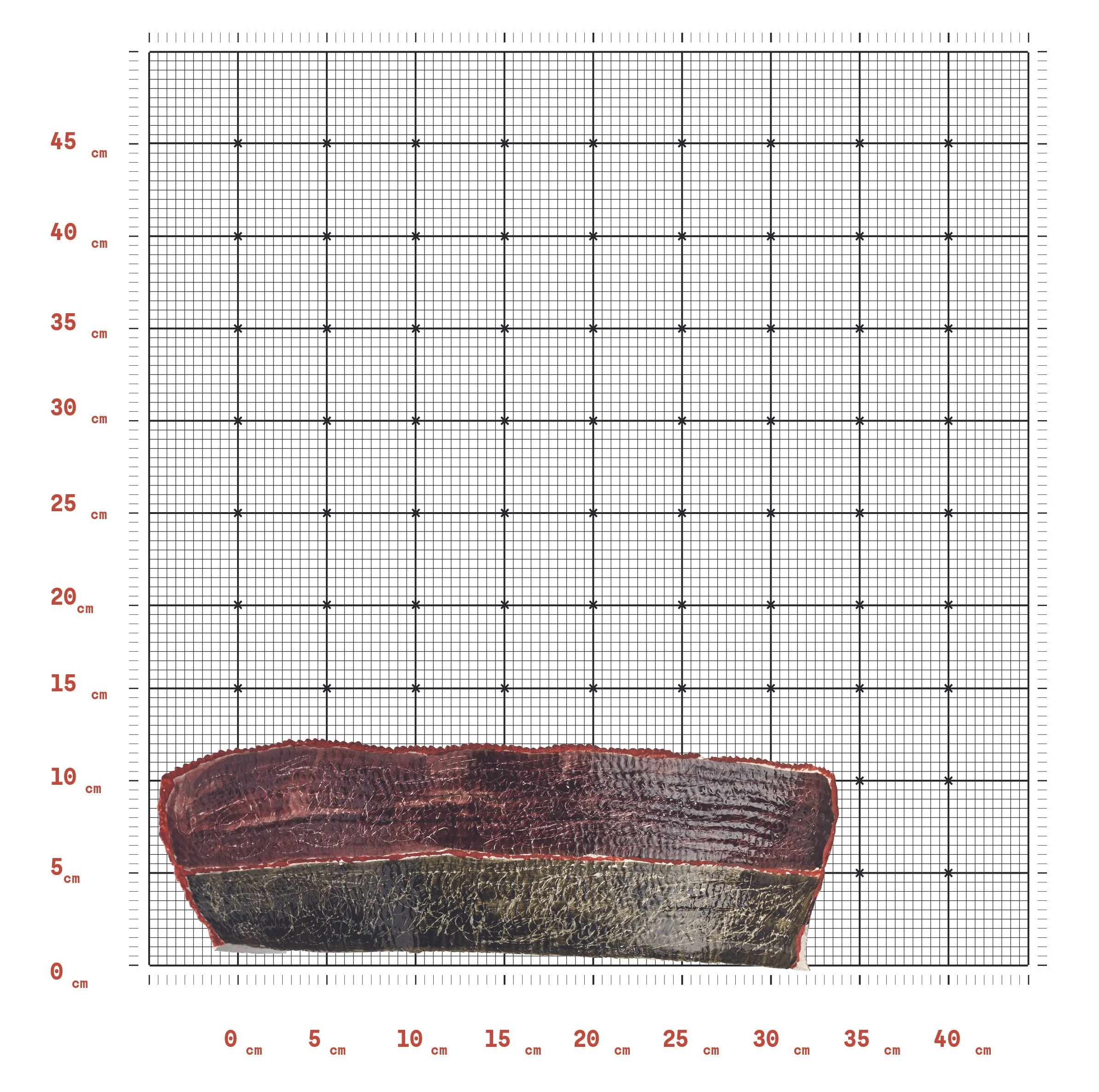
33.5cm x 12.5cm x 12cm.
The vessel is hand-coiled repeatedly over a long period of time, so to prevent slumping (which occurs when the newly pinched coil below succumbs to the weight of the wet new coil above), and allowing the shape to form gradually. This rhythm of making is what gives the work its surprising lightness, separating it from the density of traditional ceramic works.
Surface Colour
The surface finish is a cool, bright white with a matte texture and a subtle translucency of high-fired porcelain. When placed under direct light, you can see through the coils and the thinner areas of the form will reveal a soft glow.
-
Intention
I don’t usually smooth out my vessels perfection. In fact, the making process involves very few tools and is mostly shaped by hands.
The indentations along each coil come from my fingers, pressing the coils together, guiding form through repetition. The uneven ridges shows where one coil ends and another begins. The sharp edges marks the moment I choose to stop, an indication that the work is finished. The base is left unpolished, bearing traces of my scratched up banding wheel where the form is built on.
I like to preserve the work this way prior to the first round of firing as record of my hand moving, the evidence of time spent and the traces of process before the work is fully resolved. I think it’s in these irregularities that the vessels find their final shape and it’s only through them that the full story of the making becomes visible.
Function
While the work was made in service of expression (a sculptural object to live with and to let inhabit a space) over service of utility, it can also function as a bowl should you choose to.
As the surface is fully sealed, the piece may hold water or whatever else you want it to hold. However, the work is very delicate in both weight and nature due to the making process. The glaze is applied in papery thin layers in order to embrace the form without obscuring the texture so it will stain with coloured food or liquid .
-
FREE Australia wide delivery using AusPost.
Pickup: 164A Victoria Street, Brunswick.
Each piece is carefully wrapped and boxed by hand. Orders are dispatched within 1-5 business days, and you’ll receive a tracking number once your parcel is on its way.
Please note that shipping times may vary depending on your location. If you require something urgently, or would like to discuss local pickup (Melbourne only), feel free to get in touch before placing your order.
-
Each vessel you see is hand-coiled repeatedly over a long period of time, so to prevent slumping (which occurs when the newly pinched coil below succumbs to the weight of the wet new coil above), and allowing the shape to form gradually. This rhythm of making is what gives the work its surprising lightness, separating it from the density of traditional ceramic works. Hold the vessels and you can count how many coils have formed the piece. You can also see my marks of my fingers on each of the faint the faint indentations of marking along each line of coil, gently joining the clay molecules together.
Given the intimate nature of this process and the singular journey each piece has taken, I hope you understand that all sales are final, and I ask for your understanding that I won’t be able to accept any returns or refunds.